⚡ Quick Answer
Green building features help a high-rise use less water and energy, manage waste better and stay more comfortable inside. In Mumbai, the most useful features are rainwater harvesting, water recycling, efficient lighting and lifts, good daylight and ventilation and landscaped open spaces. Ask which features a project has and whether any green rating has been applied for.
- Green features can lower common-area running costs over time.
- Daylight and cross-ventilation improve comfort inside the flat.
- Ask for details in writing - "green" is not a single standard.
“Green” and “sustainable” are words you will see in many real estate brochures. For a home buyer, the useful question is simple: what does this actually change for the people living there? In a dense, coastal city like Mumbai, the answer is often quite practical – lower water and power use, better comfort in humid months and greener spaces to relax in.
This guide explains the most common green building features in Mumbai high-rises in plain language, how they can affect your monthly costs and daily comfort, and what to ask a developer. It is general information, not a description of any one project.
Why Green Features Matter in Mumbai
Mumbai has heavy rain for a few months and a long, warm, humid season the rest of the year. Water supply, power use for cooling and the space available for greenery are everyday concerns. Green features help a building deal with these conditions more efficiently.
Buyer expectations are changing too. As our article on what luxury home buyers in Mumbai look for explains, many families now ask about air, light, water and open space as much as about finishes.
Water: Harvesting, Recycling and Saving
- Rainwater harvestingRain from roofs and open areas is collected for use or to recharge groundwater.
- Sewage treatment plant (STP)Treated water can be reused for flushing, landscaping or cleaning.
- Low-flow fixturesTaps, showers and dual-flush cisterns that use less water without feeling weak.
- Water meteringSeparate meters help residents see and manage their own use.
Ask the project team how water is stored, treated and reused, and how this affects maintenance. Our guide to maintenance charges and the corpus fund explains how running costs are shared.
Energy: Lighting, Lifts and Solar
In a tall tower, common areas such as lobbies, corridors, lifts, pumps and parking use a lot of electricity every day. Efficient choices here can help keep shared costs under control:
| Feature | How it helps |
|---|---|
| LED lighting with sensors | Corridor and staircase lights switch on only when needed. |
| Energy-efficient lifts | Modern lift drives use less power and run more smoothly. |
| Solar panels | Can power some common-area lighting or water heating where roof space allows. |
| Performance glass | Reduces heat entering the home while letting in daylight. |
| Efficient pumps and motors | Lower running costs for water supply and drainage. |
General examples. Features and savings differ from project to project.
Inside your own flat, choices such as efficient ACs and smart controls also help – see smart home features in luxury apartments.
Comfort: Daylight, Air and Greenery
Some green features are about how a home feels rather than what it saves:
- Daylight – well-placed windows reduce the need for lights during the day.
- Cross-ventilation – helps homes stay fresher and dry faster in the monsoon.
- Low-VOC paints and materials – can help indoor air quality.
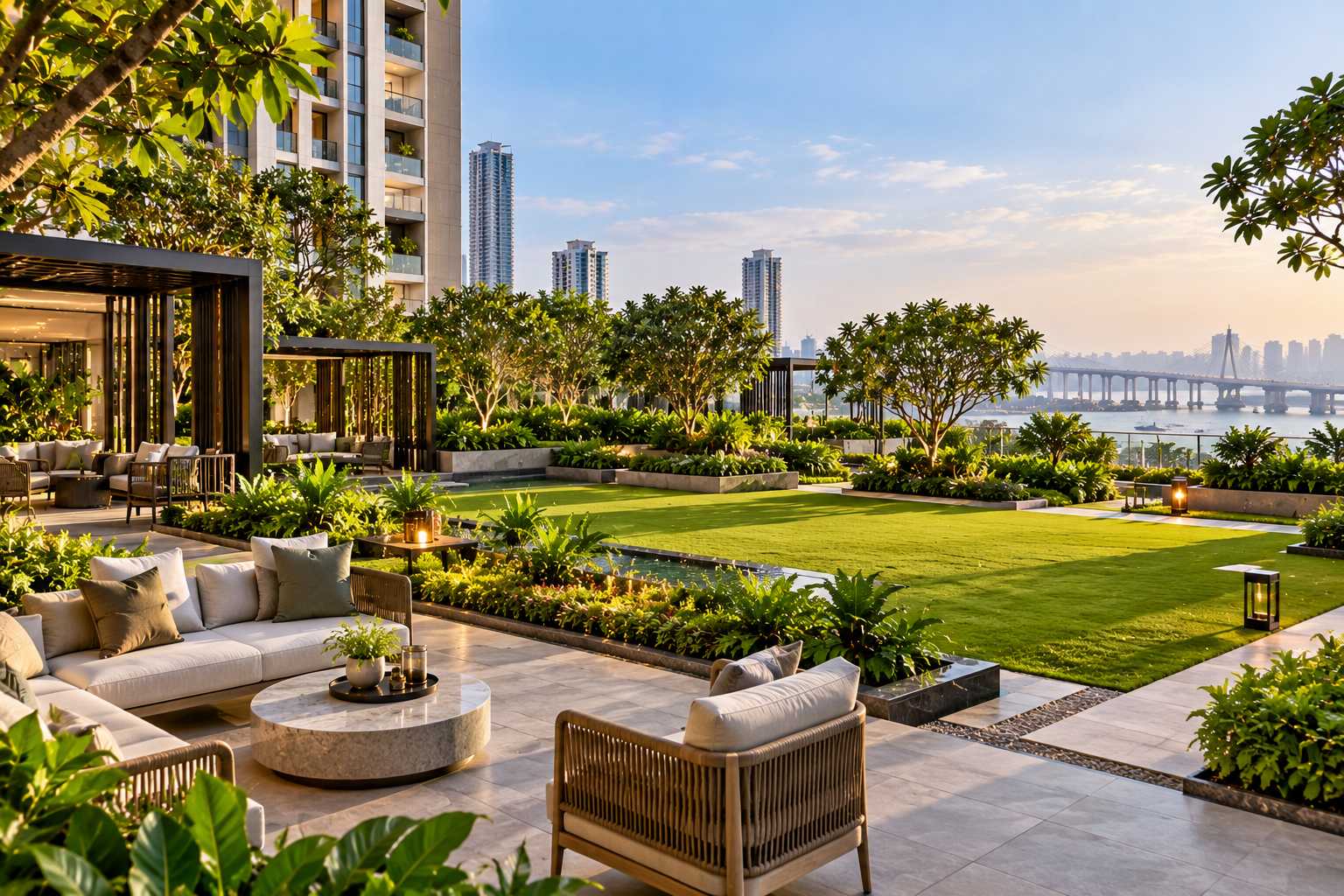
- Landscaped decks and gardens – green spaces for walking, play and rest.
At L&T The Gateway Sewri, amenities listed for the project include green lawns, a jogging track, a yoga zone and the Sky Club – see amenities at L&T The Gateway Sewri. Sewri itself is known for the flamingos that visit the mudflats each season – read flamingos at Sewri.
Waste Management
A large residential building creates a lot of waste every day. Good planning makes it easier for residents to do the right thing:
- Segregation at source. Separate bins for wet and dry waste on each floor or at collection points.
- Organic waste processing. Some buildings compost kitchen waste on site for use in the gardens.
- Recycling. Dry waste such as paper, plastic and metal is collected for recycling.
- Construction waste. Responsible developers also manage waste during construction.
Green Ratings and What to Ask
In India, some buildings apply for green ratings from recognised bodies. A rating is one useful signal, but it is not the only one. Whatever the brochure says, ask for clear, written answers:
- RatingHas the project applied for or received any green rating? At what level?
- WaterIs there rainwater harvesting and an STP? How is treated water used?
- EnergyWhich common areas use efficient lighting or solar power?
- MaterialsWhich glass, paints and insulation are used?
- Running costsHow do these features affect maintenance charges?
What Residents Can Do
A green building works best when residents use it well. Small habits add up across hundreds of homes:
- Separate wet and dry waste every day.
- Choose efficient ACs, fans and appliances when you furnish the flat.
- Use daylight and natural ventilation when the weather allows.
- Report leaking taps and pipes quickly to save water.
- Support the society in keeping green features well maintained.
Planning interiors? Our guide to home interiors before possession has tips on choosing materials and appliances.
Related Guides
- Smart Home Features in Luxury Apartments: What Mumbai Buyers Should Know
- Buying a Second Home in Mumbai: A Practical Guide
- Agreement for Sale: Key Clauses to Read Before You Sign
- Neighbourhoods Around Sewri: Parel, Lalbaug, Wadala, Byculla and Dadar
- What luxury home buyers in Mumbai look for today
- Mumbai’s eastern waterfront and new infrastructure
- Design at L&T The Gateway: Hafeez Contractor and HBA
- Maintenance charges, corpus fund and society formation
- Flat Orientation in Mumbai: Sunlight, Breeze and Views Explained
- Fire and Lift Safety in Mumbai High-Rises: What Residents Should Know
Frequently Asked Questions
What is a green building?
A green building is designed and run to use less water and energy, manage waste well and provide healthy, comfortable spaces for the people who use it.
Do green features reduce maintenance charges?
Efficient lighting, pumps and water recycling can help control common-area running costs over time, but the effect depends on the building and how it is managed.
Is rainwater harvesting useful in Mumbai?
Mumbai receives heavy monsoon rain, so collecting and using rainwater or recharging groundwater can be helpful. Ask the project team how their system works.
How do I know if a project is really green?
Ask for written details of its green features and any rating it has applied for, and check the project documents.
What green features does L&T The Gateway Sewri have?
Please contact the project team for the latest specifications. The listed amenities include green lawns, a jogging track and a yoga zone.
Can residents make an existing flat greener?
Yes. Efficient appliances, LED lighting, low-flow fittings, good waste segregation and smart controls all help, even in an existing home.
Conclusion: Look Beyond the Label
Green features are most valuable when they make daily life better – fresher air, more light, lower running costs and pleasant open spaces. Ask clear questions and get the answers in writing. To learn more about L&T The Gateway Sewri, enquire now or call +91 80503 63647.
L&T The Gateway, Sewri
MahaRERA No. P51900054969
Get the project details, floor plans and price sheet for 3, 4 and 4.5 BHK residences in Sewri, Mumbai. Our team will call you back.