
⚡ Quick Answer
Modern high-rises in Mumbai are designed with layers of safety: fire detection and alarms, sprinklers and hydrants, fire-rated staircases and doors, refuge areas and fire lifts. Before buying, ask about these features, the fire NOC and the OC. After moving in, simple habits - knowing your exits and never using lifts in a fire - matter just as much.
- Ask which safety systems the building has and who maintains them.
- Know the nearest staircase and refuge area from your flat.
- Join fire drills when the society organises them.
Mumbai’s skyline keeps getting taller. High-rise living brings open views, better light and privacy – and it also means thinking about safety a little differently. In a tall building, you cannot simply walk out of the front door in an emergency, so the building itself has to be designed to protect residents and help them move to safety.
This guide explains the fire and lift safety features commonly found in modern Mumbai high-rises, the questions to ask before you buy, and the everyday habits that keep your family safe. It is general guidance for home buyers and residents, not a technical or legal standard – always follow the instructions of the building management and the fire authorities.
Table of Contents
Why Safety Planning Matters in Tall Buildings
In a low building, people can leave quickly and fire engines can reach every floor from outside. In a high-rise, upper floors may be beyond the reach of ladders, and many people use the same staircases. That is why tall buildings rely on systems built into the structure – detection, suppression, protected escape routes and safe places to wait.
The good news is that these systems are part of the approvals process. Building plans need fire department clearance, and the building must be inspected before residents move in. As a buyer, your job is to know what to ask and to check that the paperwork is in place.
Fire Safety Features to Look For
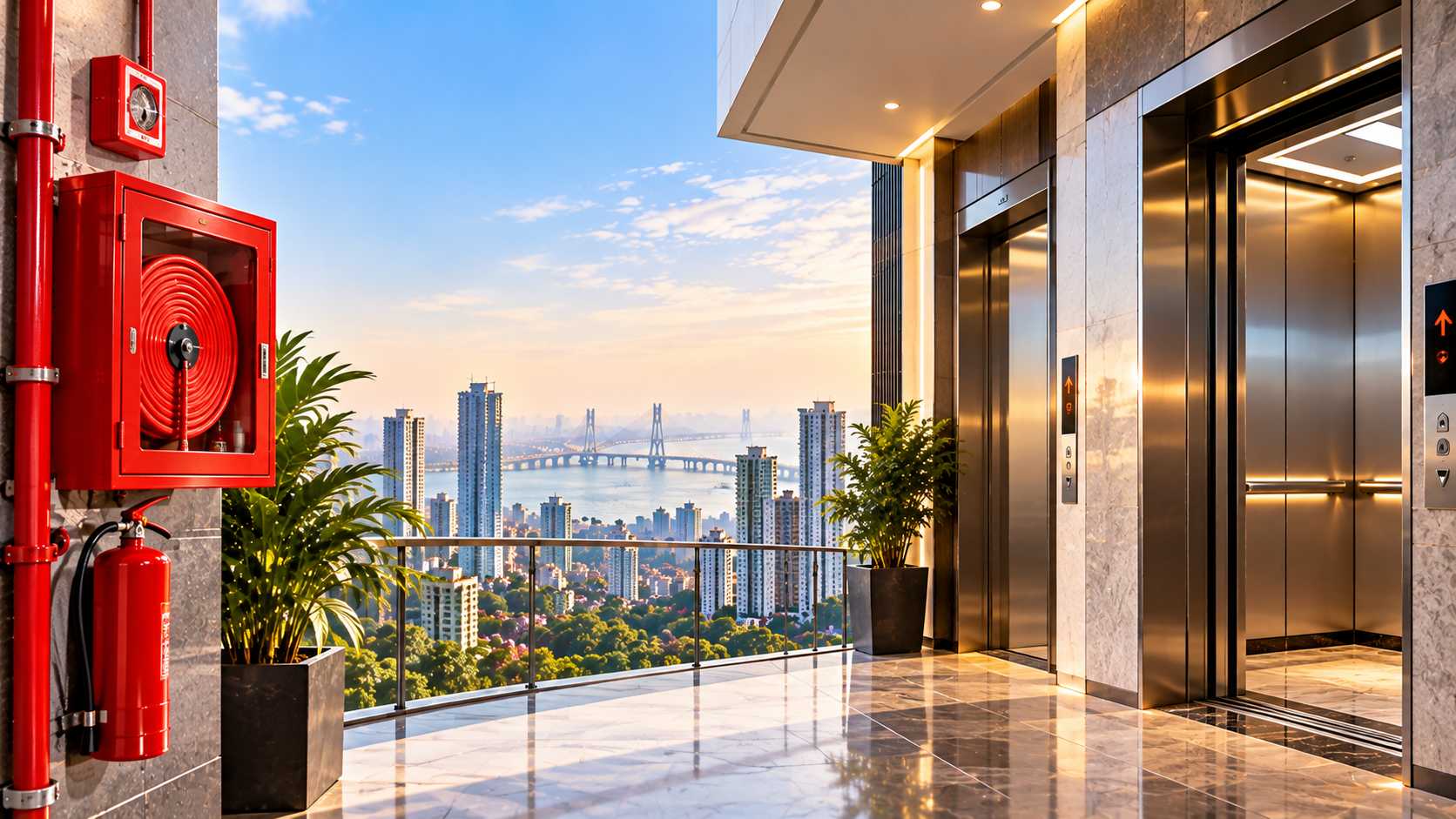
- Smoke and heat detectorsDetect a fire early and trigger alarms.
- Fire alarm and public address systemAlert residents and give instructions floor by floor.
- SprinklersSpray water automatically when they sense heat, often in common areas and sometimes inside flats.
- Hydrants and hose reelsGive firefighters water on every floor.
- Fire extinguishersPlaced in lobbies and common areas for small fires.
- Fire-rated doors and staircasesKeep smoke and fire out of escape routes.
- Refuge areasProtected open spaces on certain floors where residents can wait safely during an emergency.
- Emergency lighting and signageHelp people find exits in smoke or a power cut.
Lift Safety in High-Rise Apartments
Lifts are the lifeline of a tall building. A well-planned building usually has:
- Enough passenger lifts for the number of homes, so waiting times stay reasonable.
- A fire lift that firefighters can control during an emergency.
- A service or stretcher lift for moving furniture and for medical emergencies.
- Power backup so lifts can bring people to a floor safely if the mains supply fails.
- Alarm buttons, intercoms and CCTV inside the lift car.
- Regular maintenance and inspections by a qualified lift company.
If you are buying for elderly parents, lifts matter even more – see our guide to choosing a senior-friendly home.
Questions to Ask Before You Buy
- Which fire safety systems are planned? Ask for a list - detectors, sprinklers, hydrants, refuge areas and fire lifts.
- Has the project received fire clearance? Ask about the fire NOC for the building plans, and later the OC before possession.
- How many lifts serve each tower? Ask about passenger, service and fire lifts, and their power backup.
- Who will maintain the systems? Ask how maintenance is handled before and after the society takes over.
- Is there 24x7 security and a control room? A trained team helps respond quickly to any alarm.
Add these to our site visit checklist. Our article on gated high-rises vs standalone buildings also compares safety and management.
Everyday Safety Habits for Residents
- Know your exitsWalk the route from your flat to the nearest staircase and refuge area once.
- Never use lifts in a fireUse the staircase unless firefighters tell you otherwise.
- Keep corridors and staircases clearNo shoes racks, cycles or boxes in escape routes.
- Do not wedge fire doors openThey are designed to stay shut to stop smoke.
- Take care with electrical loadsUse quality wiring and avoid overloading sockets, especially for ACs and heaters.
- Keep a small extinguisher at homeLearn how to use it and check it every year.
- Join fire drillsPractise with your family so everyone knows what to do.
Planning your interiors? Our guide to home interiors before possession explains why it is worth choosing good-quality wiring and fire-safe materials.
Insurance and Society Records
Safety is also about being prepared for the unexpected. Many owners take home insurance that covers the structure and contents of their flat. Societies usually keep records of fire audits, lift inspections and maintenance contracts – as a resident, you can ask to see them.
See our guide to home insurance for a new flat in Mumbai and maintenance charges and society formation.
Related Guides
Frequently Asked Questions
What is a refuge area in a high-rise building?
A refuge area is a protected, open space on certain floors of a tall building where residents can wait safely during a fire until they can move down or are rescued.
Should I use the lift during a fire?
No. Use the staircase. Lifts can stop working or open on a floor with smoke. Fire lifts are meant for firefighters.
What is a fire NOC?
A fire NOC is a clearance from the fire department confirming that the building plans meet fire safety requirements. Buildings are inspected again before the Occupation Certificate is issued.
Are higher floors less safe?
Not necessarily. Modern high-rises are designed with systems for every floor. What matters most is that the systems are installed, maintained and that residents know what to do.
Who maintains the fire and lift systems after possession?
Usually the developer or its facility team at first, and then the residents' society once it takes over. Ask how this handover will work.
What safety features does L&T The Gateway Sewri have?
Please ask our team for the latest project specifications. We will share details confirmed by the developer rather than guess.
Conclusion: Safe Building, Safe Habits
High-rise living in Mumbai can be both comfortable and safe when good design meets good habits. Ask the right questions before you buy, check the approvals and learn your building’s escape routes once you move in. To get confirmed details about L&T The Gateway Sewri (MahaRERA No. P51900054969), enquire now or call +91 80503 63647.
L&T The Gateway, Sewri
MahaRERA No. P51900054969
Get the project details, floor plans and price sheet for 3, 4 and 4.5 BHK residences in Sewri, Mumbai. Our team will call you back.